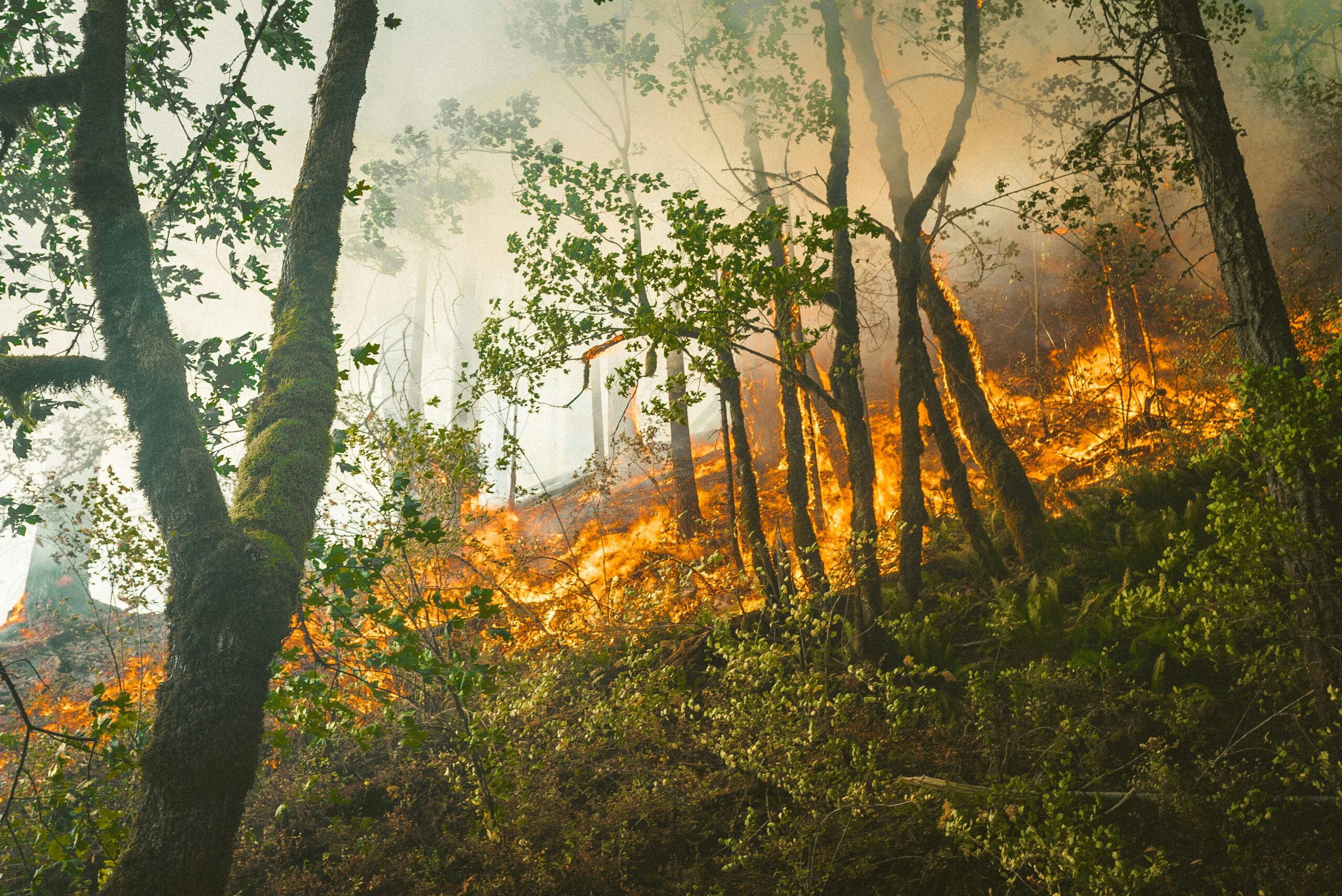

We are proud to share the publication of our report ‘Integrating spatial indicators to evaluate fire risk and impacts on Mediterranean forests’. The report provides an integrated fire risk assessment on Mediterranean forests between 2008 and 2025, contributing to the implementation and monitoring of the Forward-looking framework for Sustainable Management of Forests in the Mediterranean region. Using reliable and comparable spatial data, the report provides information that supports fire prevention, preparedness, post-fire restoration, and visionary conservation planning, contributing to solutions for increasing fire impacts in the Mediterranean forests.
AN INSIGHT INTO THE MEDITERRANEAN FIRE RISK ASSESSMENT
The assessment introduces a harmonised, Mediterranean-wide approach to evaluate fire impacts using readily available and operational spatial data. The analysis combines information from the European Forest Fire Information System (EFFIS) with data on forest typology, spatial information on forest species threatened by fire, and the distribution of protected areas. All analyses are conducted on a 1x1km grid, allowing consistent comparison across the Mediterranean terrestrial ecoregion. To assess fire impacts, the study applies a multicriteria framework based on three key dimensions:
Ecological Impact of burnt forests
The proportion of forest area burnt, fire recurrence over time, and differences in post-fire regeneration capacity among Mediterranean forest types.
Biodiversity sensitivity
Forest areas hosting species for which fire represents a primary threat are identified based on IUCN Red List assessments.
Protected area status
The overlap of Mediterranean forests with legally designated Protected Areas, reflecting their higher ecological and societal value and the additional management implications of fire within these sites. These three factors are combined into a single operational indicator: the Forest Fire Impact Score (FFIS). This indicator classifies forest areas into six impact categories, ranging from not impacted to extremely impacted, helping identify areas where fire pressure and ecological vulnerability intersect.
PRESENTING OUR MAIN RESULTS
The assessment reveals clear spatial patterns of fire impacts across the Mediterranean terrestrial ecoregion.
Extensive areas of forest have experienced fire at least once during the analysed period between 2008 and 2025, with significant concentrations of double- and multiple-burnt forests, indicating reduced resilience and increased risk of long-term degradation.
The analysis also highlights important differences among forest types. Conifer forests, particularly those located at mid and high elevations, emerge as the most vulnerable to repeated fire events.
The study also identifies areas where high fire impacts overlap with protected forests and concentrations of fire-threatened species. These locations represent critical hotspots where fire management, restoration, and biodiversity conservation efforts need to be closely aligned.
By combining information on fire history, forest vulnerability, biodiversity sensitivity, and protection status, the Forest Fire Impact Score (FFIS) provides a practical tool to support more targeted forest fire management across the Mediterranean region. It supports decisionmakers and practitioners in identifying areas where fire prevention and suppression should be strengthened, where post-fire rehabilitation is most urgently needed, and where conservation measures should focus on safeguarding vulnerable species and high value forest ecosystems.
PRESENTATION AT EFI MEDITERRANEAN NETWORK
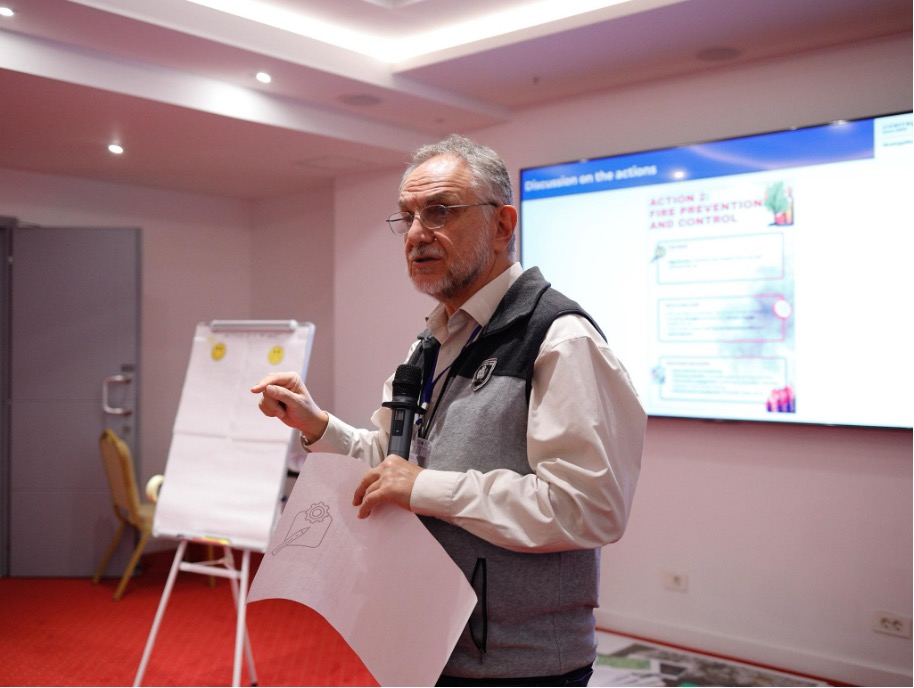
On 4 March 2026 insights of the assessment and its results were presented during the 3rd session of the EFI Mediterranean Network Forum 2026 ‘From suppression to governance: Towards integrated fire management in the Mediterranean’.
The session provided a platform to exchange knowledge on Integrated Fire Management in the Mediterranean region and explored how forest management practices influence fire regimes and biodiversity outcomes.
During the webinar, Gavriil Xanthopoulos (CIHEAM MAICh) presented the ‘Mediterranean Indicator on Forest Fire Management Effectiveness’, developed within the StrategyMedFor project. The presentation introduced the methodological framework behind its development, and presented spatial mapping results.
The presentation highlighted the importance of combining scientific knowledge, spatial data, and management practices to improve fire prevention, preparedness, and ecosystem resilience across Mediterranean forest landscapes.
For more Information:
Stay tuned as StrategyMedFor enters its final phase!
LinkedIn: StrategyMedFor
Facebook: Strategy Med For
Instagram: StrategyMedFor